

Some of the most valuable real estate assets are not constrained by their physical condition—they are constrained by their legal history.
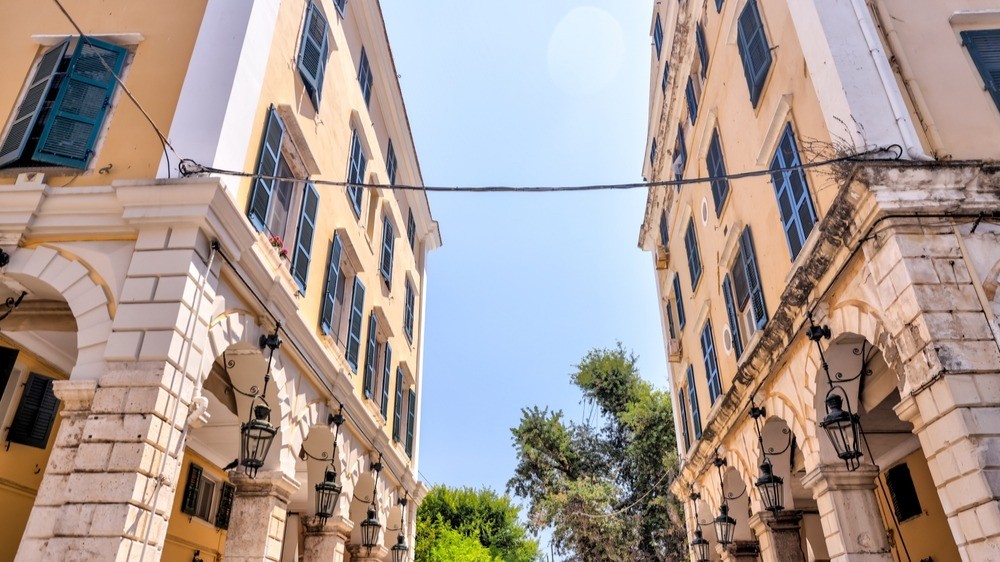
One of the most sophisticated matters our firm has handled in recent years involved a protected early twentieth-century landmark in the historic centre of Thessaloniki. Architecturally significant, commercially exceptional and protected under a Presidential Decree, the property possessed every characteristic sought by investors. Yet despite its obvious market value, it had remained effectively immobilised for years.
The obstacle was not structural.
It was legal.
⚖️ Reconstructing Three Generations of Ownership
Over almost two decades, ownership had passed through three generations of the same family by way of intestate succession, successive notarial declarations of inheritance acceptance, and parental transfers of bare ownership. Each transaction had been perfectly understandable in isolation. Together, however, they had created a remarkably intricate ownership structure that required complete legal reconstruction before any transaction could safely proceed.
Every stage of the succession had to be examined independently.
Had each inheritance been validly accepted or renounced under the Greek Civil Code? Were succession rights evidenced by the appropriate notarial instruments? Had every transfer been properly transcribed in the former Mortgage Registry (Υποθηκοφυλακείο) and correctly migrated into the Hellenic Cadastre pursuant to Law 2664/1998?
These questions are far from academic. Even minor inconsistencies between historical title registrations and current cadastral records may create defects in the chain of title, complicate financing, reduce marketability and expose both purchasers and lenders to unnecessary legal risk.
📐 Beyond Title: Reconciling the Property Itself
The legal review extended well beyond succession.
Ownership percentages across multiple horizontal property units had to be reconciled with the original deed establishing horizontal ownership under Law 3741/1929 and Articles 1002 and 1117 of the Greek Civil Code. Amendments to the original ownership structure, historical floor plans, cadastral surveys and the allocation of ideal ownership shares all required verification to ensure that the legal documentation accurately reflected the building as it exists today.
For heritage buildings that have evolved over many decades, discrepancies between historical documentation and current cadastral records are not unusual. Identifying and resolving those discrepancies before they become transactional issues is often one of the most valuable components of legal due diligence.
🏛️ The Heritage Dimension
The building’s protected status introduced an additional regulatory layer.
Any future restoration, alteration or redevelopment must comply not only with ordinary planning legislation but also with the specialised framework governing listed buildings, including the approvals required by the competent heritage and architectural authorities.
At the same time, heritage designation is not merely a restriction. Under the appropriate statutory framework, mechanisms such as transferable development rights may, where available, preserve or even enhance the economic value of properties whose architectural significance limits conventional development.
🎯 The Golden Visa Arbitrage: Turning Restrictions into Assets
Nowhere is the connection between heritage status and strategic value clearer than in the current framework of the Greek Golden Visa program.
While the general investment threshold for real estate has risen to €400,000 or even €800,000 across prime locations in Greece, the law introduces a powerful incentive for architectural preservation: the investment threshold for protected and landmark buildings remains fixed at €250,000 nationwide. This creates a highly lucrative arbitrage opportunity for international investors. However, capturing this value is contingent on absolute legal compliance. The €250,000 threshold must reflect the pure acquisition price in the deed, a strict obligation for full restoration applies, and any subsequent transfer before the completion of the works is legally void.
Understanding where legal constraints end and strategic opportunities begin is often what distinguishes technical legal review from genuine legal advisory work.
💼 Why This Matters to Investors
Institutional investors, lenders and sophisticated purchasers rarely hesitate because a building is old.
They hesitate because legal uncertainty creates commercial uncertainty.
Unresolved succession issues, incomplete cadastral histories, inconsistencies in ownership percentages or unresolved heritage restrictions can delay financing, reduce valuations, discourage investment committees and, in some cases, render a prime asset effectively illiquid despite its exceptional location.
Resolving those issues is therefore not simply a matter of legal compliance—it is the process through which dormant assets become commercially viable investments.
🔍 What the Engagement Required
Our work included, among other matters:
- Reconstructing the complete succession history across multiple generations and notarial records;
- Verifying inheritance documentation, heirship evidence and civil registry records;
- Auditing historical transcription records and their migration into the Hellenic Cadastre;
- Reconciling historical architectural documentation with current cadastral surveys;
- Validating co-ownership percentages and the legal structure of the horizontal property regime;
- Assessing the regulatory implications of the building’s protected status, Golden Visa compliance, and the strategic planning options available under Greek law.
💡 The Broader Lesson
Heritage buildings rarely become difficult investments because of their architecture.
More often, they become difficult because decades of succession, registrations, cadastral records and regulatory obligations have never been reconciled into a coherent legal framework.
Before a landmark building can become an investment opportunity, it must first become legally intelligible.
That transformation is seldom visible to the market.
Yet it is precisely this work—combining succession law, real estate law, cadastral analysis, planning regulation and strategic legal due diligence—that unlocks value, facilitates financing and allows historically significant assets to participate confidently in the modern investment market.
Amoiridis Law Services advises investors, families and institutions on complex real estate transactions, succession planning, title reconstruction and heritage-property matters throughout Greece.
For any further information and clarifications please do not hesitate to contact our qualified legal team, ready to provide you with further personalized information tailored to your needs and your profile.
You can email us: or call/text us directly at: +306908351705 (WhatsApp/Viber)
Athens, July 2026
Follow us on